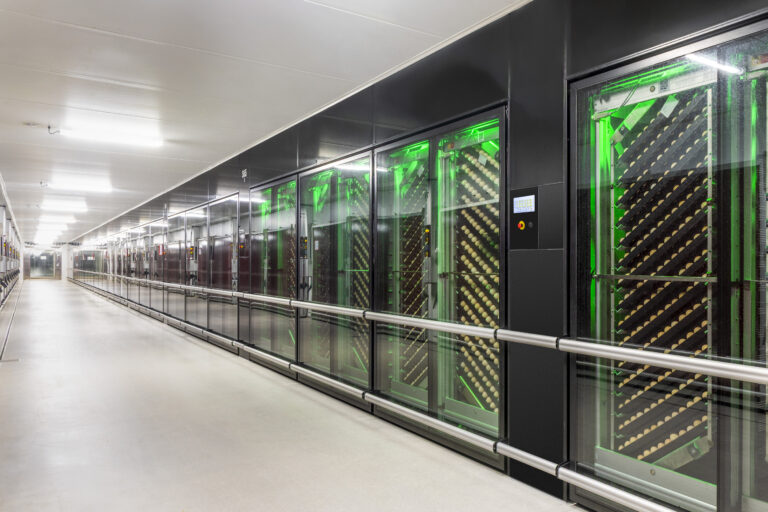
Over the past three years, HatchTech has collected energy consumption data from 42 commercial hatcheries across Europe, the Americas, and Asia Pacific that operate both conventional setters and MicroClimer Setters side by side. The dataset — covering more than 680 million eggs set — gives the clearest picture yet of where the energy savings come from and how to maximise them.
Where conventional setters waste energy
In a turbulent-flow setter, the heating and cooling system must constantly compensate for uneven air distribution. Sensors at different positions in the machine report different temperatures, so the controller oscillates between heating and cooling to try to reach a stable average — a process that generates significant waste heat and requires more powerful compressors than the biology actually demands.
Our analysis shows that this compensation cycle accounts for between 28 % and 35 % of total electrical consumption in conventional units operating in ambient temperatures above 25 °C — common in tropical and subtropical hatchery environments.
The laminar difference
Because laminar airflow delivers uniform conditions to every tray position, the MicroClimer Setter’s control system operates within a much narrower band. The compressor runs at lower duty cycles, and the system requires less active heating during the critical days 1–7 when embryos generate little metabolic heat of their own.
“We replaced four conventional setters with two MicroClimer units and our electricity bill for the setter room dropped by 44 % in the first full quarter — more than the modelling had predicted.”
— Production Manager, Tier 1 broiler integrator, Brazil
Practical steps to maximise savings
The data shows three operational factors that most strongly predict energy performance: ambient temperature management in the setter room, loading pattern consistency, and calibration frequency. Hatcheries that maintain setter room temperature below 22 °C, load within 2 % of nominal capacity, and recalibrate sensors quarterly achieve savings at the top end of the 35–44 % range.
Our service team has developed a 12-point energy audit checklist for existing MicroClimer installations. Contact your regional service manager to schedule a free audit.